Physiotherapy website design has one extra layer that most small business sites don't. As well as being clear and easy to book, your site is advertising a regulated health service, so the words you use matter. The good news is that the rules point in the same direction as good design: honest, calm, informative and focused on helping people take the next step.
Physiotherapy website design starts with a calm first step
Many people land on a physio's website in pain, after an injury or after being told to "see a physio". They want reassurance and practical answers. Lead with what you help with, where you are, and a clear way to book. Keep the tone calm. Bold claims and countdown offers feel out of place in healthcare.
Explain the first visit
Uncertainty stops people booking. A short first-visit page answers the questions they're wondering about:
- How long the first appointment takes.
- What usually happens: a conversation, an assessment, a discussion of options.
- What to wear and what to bring, such as referrals, scans or reports.
- What it costs, and how payment and health fund claiming work.
- What happens if they need to cancel.
Services, carefully worded
Describe what you do and how you work, in plain language. "We assess what's going on, explain it, and agree a plan with you" is helpful. "Fix your back pain for good" is not.
Ahpra's guidelines for advertising a regulated health service (opens in a new tab) say advertising must not be false, misleading or deceptive, must not use testimonials, must not create an unreasonable expectation of beneficial treatment, and must not encourage unnecessary use of health services. They also say a gift, discount or other offer needs its terms and conditions stated. I keep those rules in mind when laying out a clinic site, but you're responsible for your own advertising, so check the final wording against the guidelines before launch.
Reviews and testimonials
This is the part that's easiest to get wrong. Ahpra's testimonial guidance (opens in a new tab) defines a testimonial as a recommendation or positive statement about the clinical aspects of a service. That includes comments about a symptom, a diagnosis or treatment, or an outcome. Those can't be used in your advertising.
Comments that aren't about clinical aspects, such as customer service or communication style, aren't considered testimonials. In practice, that means you shouldn't embed a live feed of all your Google reviews on your website, because some of them will mention treatment and results. If you want to show feedback, choose non-clinical comments carefully.
Practitioner profiles
Patients like to know who they'll see. For each practitioner, include a real photo, qualifications, areas of interest and the days they work. Patients can check registration on Ahpra's public register (opens in a new tab), so it's worth making names match the register exactly.
Booking
Put a book-now button in the header of every page, linked to your existing practice booking software. If it supports links to a particular practitioner or appointment type, use those on the profile and first-visit pages. Google also lets clinics add a booking link (opens in a new tab) to their Business Profile, so people can book from the search results.
Fees and practical details
State your fees for initial and follow-up appointments, how payment works and whether you can process health fund claims on the spot. Add parking, public transport, wheelchair access and lift details. These small details make a first visit easier to plan.
Privacy on your forms
A website contact form isn't the right place for clinical information. Keep forms short: name, contact details, preferred times and a general reason for the enquiry. Add a line asking people not to include health details. Your privacy policy is your own to supply; I'll add the approved wording you give me, but legal drafting isn't part of my packages.
See the concept
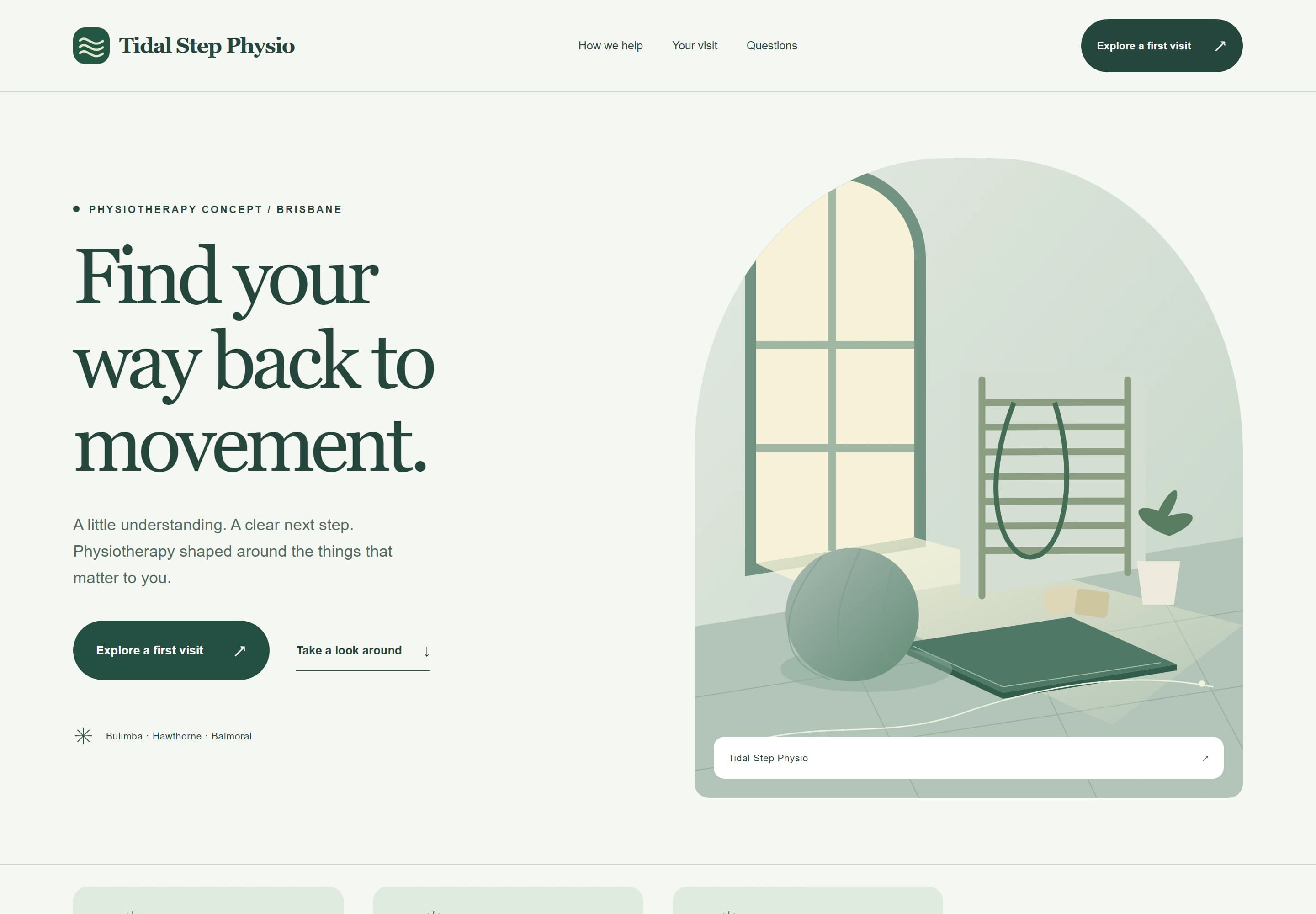
Tidal Step Physio is a concept site I designed for a fictional physiotherapy clinic. Have a look at the clinic concept. It has a calm homepage, a "your first visit, explained" page, a gentle question-and-answer section and the place where a real clinic's booking system would connect. It deliberately has no testimonials. The clinic, practitioners and hours are fictional.
Which package suits a clinic
A solo practitioner can start with Launch: 1 focused page for $999. Most clinics suit Local, with up to 5 pages for $1,999, which leaves room for services, a first-visit page, practitioner profiles and contact. If you'd like your booking system embedded on the page, Signature includes one booking embed and up to 8 pages for $3,499. AUD. GST is not charged.
Tell me about your clinic through the website brief, or run the free website check on your current site.